Depth-Rich Vision With 3D Cuboid Labeling
Enhance perception models with 3D cuboid labeling that captures accurate depth, volume, and object position for clearer scene understanding.
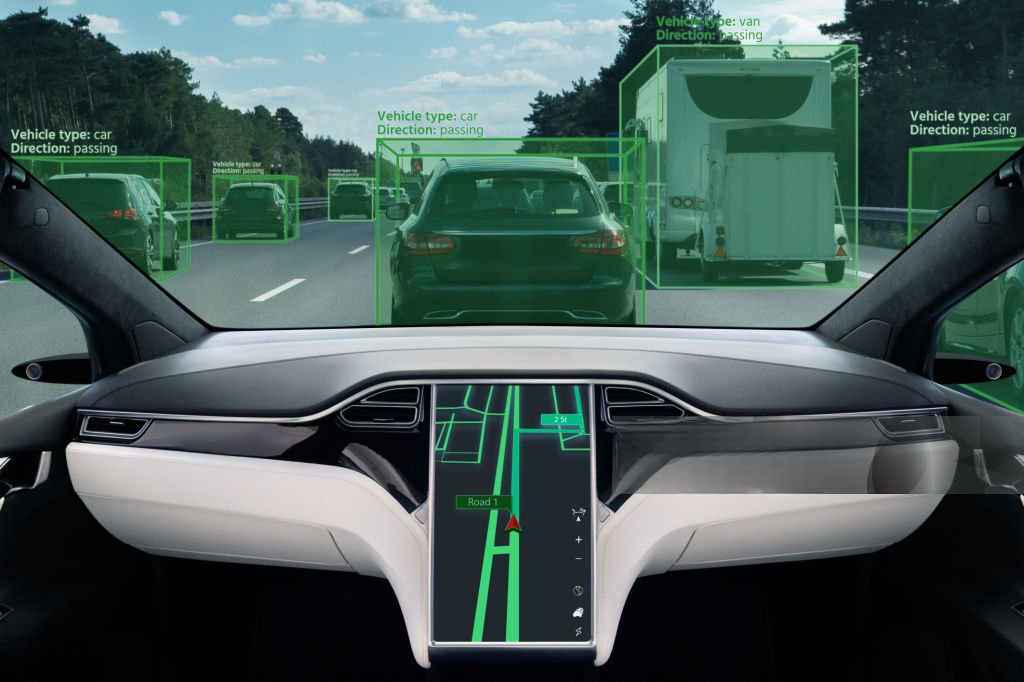
Enhance perception models with 3D cuboid labeling that captures accurate depth, volume, and object position for clearer scene understanding.
Depth-aware object understanding is key for advanced perception. Annotalabs provides 3D cuboid labeling services that map objects by height, width, and depth. This supports LiDAR, stereo vision, and camera-based systems. Trained annotators draw cuboids in complex scenes, handle occlusion, and label multi-sensor data with consistent rules.
Annotalabs is a U.S.-headquartered data annotation partner with over 20 years of experience in outsourcing and global delivery. We deliver secure, scalable, and cost-efficient workflows for autonomous vehicles, robotics, smart cities, retail analytics, and spatial AI.
3D cuboid labeling services support both 2D and 3D data to improve depth perception and object recognition. Accurate cuboid geometry strengthens tracking and spatial understanding.
Define object volume and orientation for highly accurate and robust spatial modeling and real-world positioning.
Annotate 3D depth data to support advanced autonomous navigation and obstacle detection workflows.
Apply cuboids across synchronized camera, LiDAR, and radar sources for cohesive perception pipelines.
Interpret partial or obstructed objects to maintain consistent cuboid placement in complex scenes.
Assign semantic categories to 3D objects for improved classification and scene understanding.
Label detailed environments with precise cuboid geometry for advanced robotics and industrial AI.
Maintain cuboid alignment and geometry consistency across sequential frames to support tracking.

Deliver benchmark datasets with rigorous multi-layer QC to support model training and validation.
Depth expertise, structured workflows, and robust annotation logic strengthen spatial accuracy. With 3D cuboid labeling services, enterprises gain clearer object structure and more reliable perception output.
Annotators capture object height, width, and depth to improve spatial reasoning and 3D detection accuracy.
Teams handle camera images, LiDAR frames, and point cloud data across diverse hardware systems.
Operations expand rapidly to efficiently process large volumes of 3D data for enterprise perception pipelines.
Guidelines adjust smoothly for sensor types, object classes, and environment-specific mapping needs.
Refined workflows, domain expertise, and high-accuracy tools drive stronger spatial datasets. With 3D cuboid labeling services, enterprises enhance perception systems and ensure consistent real-world performance.
Experience across autonomous driving, robotics, and smart city applications enhances annotation reliability.
Cost-effective models maintain strong spatial accuracy while supporting large-scale dataset labeling.
SOC-compliant processes protect sensitive perception data with robust and reliable controls and oversight.
Tailored guidelines match sensor setups, object types, and spatial objectives remarkably precisely and consistently.
Multi-layer QC ensures accurate cuboid geometry and coherent spatial representation across frames.
Large, trained teams process multi-sensor data exceptionally efficiently and reliably for enterprise deployment.
Here are answers to common questions about 3D cuboid annotation, accuracy, and outsourcing to help businesses scale their computer vision projects.
In computer vision, 3D cuboid labeling services refer to annotating objects by defining their height, width, and depth so models can understand spatial structure. Through 3D Cuboid Labeling Services, raw sensor or image data is converted into accurate volumetric representations that support scene understanding, measurement, and real-world positioning across autonomous driving, robotics, and spatial AI applications.
They give models a sense of volume and distance, which is critical for safe navigation and physical interaction in autonomous vehicles and robotics.
Autonomous vehicles, warehouse robotics, smart city infrastructure, and AR/VR applications rely heavily on 3D spatial annotation.
Occlusion, sensor noise, and maintaining temporal consistency across video frames or LiDAR sweeps are the most common challenges.
It requires highly specialized training and expensive software. Annotalabs provides a ready-made, scalable team of experts with the right tools to handle complex 3D data.